What is Behind Your Stone Veneer?
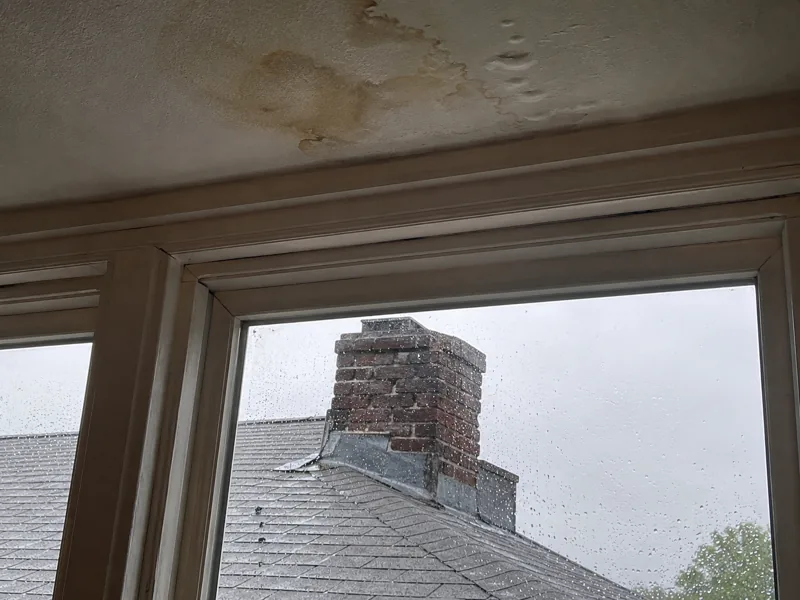
There is a time bomb waiting to be discovered behind many thin stone veneer and stucco wall systems unknown to the property owners. The danger is moisture, which leads to rotting plywood, structural decay, and mold.
I know that may sound sensationalistic, but it is critical to educate both the public and other masonry contractors. Thin stone veneer wall systems must overcome the same moisture management issues as stucco. In warmer parts of the country, the industry has dealt with this for years, but as thin stone veneers become more common in New England, the need for higher standards is critical.
What’s Behind the Veneer is More Important Than the Veneer Itself!
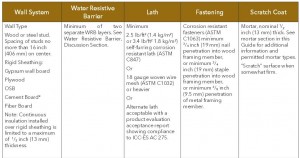
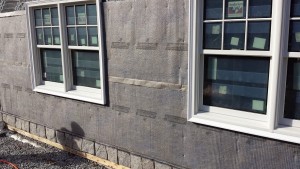
According to the Masonry Veneers Manufacturers Association, the standard installation requirement on wood-framed structures involves a water-resistive barrier (WRB) consisting of two layers—usually tar paper. Why two layers? It comes down to surface tension. When the scratch coat is applied directly against a single layer of paper, water eventually wicks through. Tar paper and Tyvek are resistive, but they are not waterproof. If your mason can’t explain their moisture control system, you are looking at a future failure.
How Vapor Drive Affects Stone Veneer in Massachusetts Homes
Heavy rains, roof runoff, and even sprinklers can saturate stone veneer. When that moisture is heated by the sun, it turns to vapor. This “Vapor Drive” moves moisture from high-density areas (the wet stone) toward low-density areas (the interior of your wall). If that vapor hits a cool surface inside the wall system, it condensates. Without a path to escape, that water sits against your sheathing.
3 Questions to Ask Your Stone Veneer Contractor
- How many layers of WRB are you using? (The answer should be at least two).
- Are you using a drainage mat or rainscreen? (Crucial for air circulation).
- How does the system weep at the bottom? (Water must have a clear exit path).
At JB Mohler Masonry, we do not rely on just two layers of paper. We install a 3/8″ drainage mesh behind the lathe, creating vertical air channels that allow moisture to run down and exit freely. This is the difference between a 10-year wall and a 50-100+ year wall. You can see how this looks in practice on our Lancaster chimney restoration project.
Investing in Piece of Mind
Typically, the advanced drainage systems we use add about $10.00 per square foot to the cost of the veneer. In the context of a full home remodel or fireplace makeover—like the one we recently completed in Wayland, MA—that is a small price to pay to ensure your home remains rot-free.
Expert Masonry Services in Central MA & MetroWest
We provide high-performance stone veneer installations and masonry repairs throughout Lancaster, Wayland, Sudbury, Concord, and the surrounding Massachusetts towns.
If you are looking for a Massachusetts Thin Stone Veneer contractor who prioritizes structural integrity over the “cheap” fix, please call 978-365-6800 or complete our online request form.
Related masonry guides
For a closely related explanation, see how a lightweight masonry block can be detailed and finished with real stone veneer.
For the next practical step, review how thin stone veneer differs from full-bed stone and where each system makes practical sense.