Visually Checking a Chimney
As a homeowner, keeping your chimney in good working order is a matter of both safety and structural stability. Many chimney problems hide in plain sight for years before they become critical. Don’t wait until the “bottom falls out” to address your masonry—there are several things you can check yourself, though there is no substitute for a professional chimney inspection.
External Inspection: What to Look For
Begin with a ground-level visual inspection. If you have a pair of binoculars, they are incredibly handy for a close-up look without needing a ladder. You are looking for obvious signs of distress:
- Masonry Damage: Look for loose or missing bricks, gaps in the mortar joints, or “spalling” where the brick faces are chipping off.
- Structural Lean: Check the angle of the chimney against the house. Any leaning is a sure indication of a structural issue.
- Flashing and Crowns: The top of the chimney takes the brunt of Mother Nature. Ensure the lead flashing is tight against the masonry and check for cracks in the concrete crown (cap).
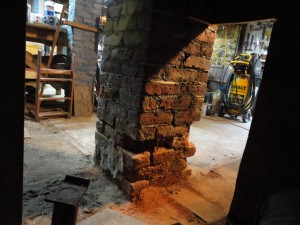
- Strategic Cracking: A common fail point is directly behind the fireplace. Check this area specifically for vertical or stair-step cracks.
Internal Red Flags: Leaks and Stains
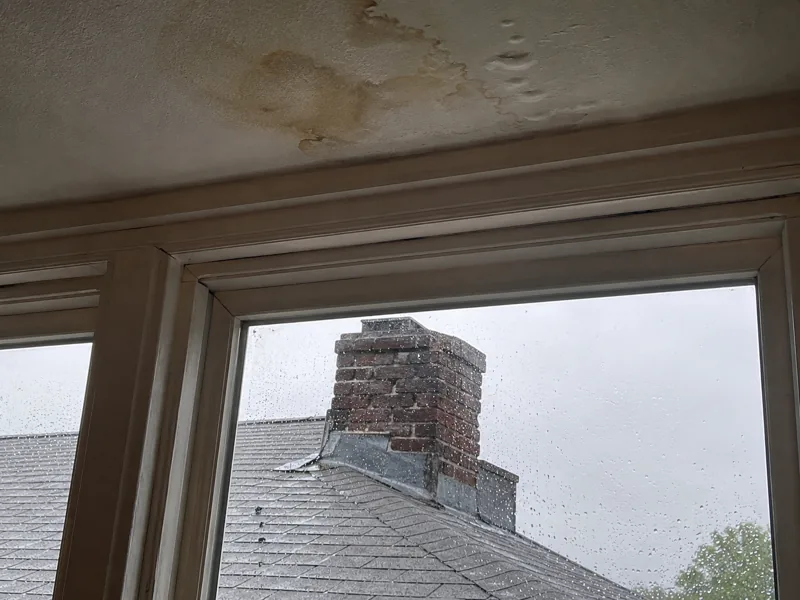
Another sign you might need a Massachusetts chimney contractor is the presence of stains inside your home. If your wallpaper, paint, or plaster near the chimney is peeling, stained, or damp, moisture is likely penetrating through a failed flue liner, a damaged crown, or porous exterior brickwork.
Evaluating the Flue and Smoke Chamber
While you can’t see the entire interior, you can examine the base of the flue through the cleanout doors. Using a flashlight and a mirror, look for black, gooey, tar-like buildup called creosote. This is a major fire hazard. You should also check the smoke chamber—the area above the damper—for debris or structural cracks that could allow heat to transfer to the wooden framing of your home.
Device Connections and Dampers
Check the device connected to your chimney. On fireplaces, ensure the damper opens and closes without sticking. For woodstoves, examine the connector pipe for corrosion or leaks. On furnaces, look for exterior masonry damage, but leave the interior furnace flue inspection to a professional, as these are delicate systems involving dangerous exhaust gases.
Professional Chimney Inspections in Central MA
Routine cleaning and inspections can alert you to damage before it becomes an expensive rebuild. We provide expert chimney safety evaluations and masonry repairs throughout Lancaster, Concord, Wayland, and the MetroWest area.
If you notice any of these warning signs, call 978-365-6800 or complete our online request form immediately.