Chimney Repointing in Central Massachusetts
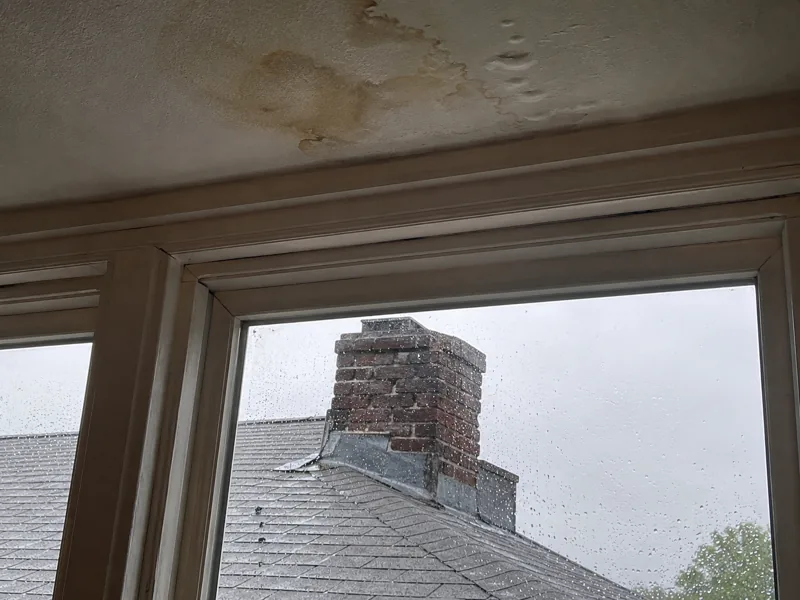
From the ground, it can be difficult to tell what a chimney actually needs. Homeowners often look up, see something that does not look right, and assume the answer is repointing.
Repointing is specifically the process of removing failed mortar from between brick or stone and replacing it with new mortar appropriate for the original masonry. It is a good repair when the joints have washed out but the brick, stone, and chimney structure are still sound.
JB Mohler Masonry repoints brick and stone chimneys throughout Central Massachusetts and MetroWest. Before recommending the work, we determine whether the chimney is still a good candidate for repointing or whether previous repairs and deeper deterioration have made partial rebuilding the better option.
For the broader masonry service, see our general masonry repointing page. For chimney-specific damage, this page explains how we separate repointing from larger chimney repair work.
What failing chimney mortar looks like
Repointing may be needed when mortar has eroded or washed out of the brick or stone joints.
That deterioration can happen because of:
- Years of wind and rain
- Repeated freezing and thawing
- Masonry work completed during freezing conditions
- Improper mortar used in an earlier repair
- The natural aging of lime mortar in an antique chimney
- Water entering through a failed crown or deteriorated masonry above
Some joints may appear recessed or powdery. In more advanced cases, sections of mortar may be loose enough to fall out.
The visible surface does not always show the full condition. Mortar may look damaged from below while remaining solid deeper in the wall, or it may have been patched before and be separating from the older material behind it.
When is repointing a good repair?
Repointing is often most successful when it is the first major repointing the chimney has received and the masonry units remain in good condition.
A chimney may be a good candidate when:
- The mortar has eroded but the brick or stone remains sound
- The chimney is still straight and stable
- Failed joints can be removed back to solid material
- Previous repairs have not left multiple shallow layers of mortar
- The damage is concentrated in the joints rather than throughout the brick faces
Pieces of whole mortar joints hanging partially away from the brick often indicate that someone has repointed the chimney before. That does not automatically mean it cannot be repaired again, but it tells us that the material behind the loose surface needs to be inspected.
When repointing is not enough
Mortar repair cannot correct every chimney problem.
Partial rebuilding may be more appropriate when:
- Brick faces are badly spalled or missing
- Large areas have already been patched more than once
- Previous mortar is separating in whole strips
- The chimney has shifted or lost its alignment
- Water damage extends deep into the masonry
- The upper courses are loose
- There is not enough solid masonry left to hold a durable joint
When we assess a chimney for repointing, it is common to find related repairs such as brick replacement or rebuilding part of the upper stack.
The goal is not to sell the smallest repair or the largest one. It is to identify what will actually hold.
How deep should mortar joints be removed?
A durable repoint requires more than scraping the surface and pressing new mortar over the front of the joint.
A practical rule is to remove the failed mortar to a depth of approximately twice the height of the joint, or until solid material is reached inside the masonry.
The exact depth depends on:
- Joint size
- Brick or stone condition
- How deeply the mortar has deteriorated
- Whether the chimney has been repointed before
- Whether the existing material remains firmly bonded behind the surface
Shallow surface pointing may look finished for a short time, but it does not have enough depth to remain bonded through New England weather.
Matching the replacement mortar
The replacement mortar should be compatible with the masonry and, as a general rule, should resemble the mortar used in the original construction.
For older chimneys built with lime mortar, we use a compatible lime-based repair mortar rather than replacing it with a much harder modern mix.
Mortar choice also depends on exposure and location:
- Above-ground masonry generally requires a different mortar than below-grade work
- Historic lime masonry needs a softer, more breathable repair
- More modern chimney construction may require a Portland-cement-containing mix
- The compressive strength of the mortar must remain appropriate for the surrounding brick or stone
Using the strongest mortar available is not the goal. Mortar should be compatible with the masonry it is supporting.
Why mortar can be too hard
Mortar with excessively high compressive strength can damage softer brick.
Masonry needs to absorb and release movement caused by moisture, temperature, and structural load. When the mortar is significantly harder than the brick, stress can transfer into the masonry units instead of the joints.
That can lead to:
- Chipped or broken brick faces
- Cracking through the brick rather than the mortar
- Moisture becoming trapped in the wall
- Reduced breathability in historic masonry
- Accelerated freeze-thaw damage
Older lime mortar is intentionally softer and more vapor-permeable than many modern cement-rich mortars. Replacing it with a hard, dense material can change the way the entire wall handles moisture.
A useful rule is:
Replace failed mortar with mortar compatible with the original construction, not simply the hardest mix available.
Brick and stone chimney repointing
Brick and stone chimneys require the same basic judgment but not always the same repair method.
Brick joints are relatively regular and can often be removed to a consistent depth. Stone chimneys typically have deeper, irregular joints and may contain older lime-based mortar.
With stonework, loose or shifted stones must also be evaluated. Repointing around a stone that has lost its bearing does not make the masonry stable again.
We assess:
- Joint depth
- Mortar type
- Brick or stone condition
- Loose masonry units
- Water-entry points
- Crown condition
- Whether any part of the chimney should be rebuilt first
Other repairs commonly found during repointing
A chimney rarely fails in only one place.
Related work may include:
- Replacing damaged brick
- Resetting loose stone
- Partial chimney rebuilding
- Repairing or rebuilding the crown
- Replacing failed flashing when it is genuinely contributing to water entry
- Repairing openings around the flue
These repairs should be considered together. Repointing the joints below a failed crown, for example, will not prevent water from continuing to enter the masonry.
If water entry is part of the problem, our guide to stopping a leaking chimney explains why the crown, brick, mortar, flue openings and flashing need to be evaluated together. When the crown itself has failed, see our page on chimney crown repair.
Can chimney repointing be estimated from photos?
Sometimes.
Clear photos may be enough when the affected area is visible, the chimney is straightforward, and the extent of deterioration can be reasonably judged.
An onsite assessment may be needed when:
- The chimney is large
- Multiple roof levels are involved
- The damage is difficult to see from the ground
- Previous repairs complicate the condition
- Brick replacement or rebuilding may be required
- Access and staging significantly affect the work
Send us clear photos of the chimney and surrounding roof. We can usually determine whether a photo estimate is practical or whether the chimney needs to be inspected in person.
Chimney repointing from an experienced mason
JB Mohler Masonry is an owner-operated masonry company based in Lancaster, Massachusetts.
We evaluate chimney repointing based on:
- What caused the mortar to fail
- Whether the existing masonry remains sound
- Whether the chimney has been repaired before
- What mortar is compatible with the original work
- Whether related crown, brick, stone or rebuilding work is needed
- Whether repointing will provide a durable repair
Have mortar washing out of your chimney joints? Send us clear photos through our contact page for a free initial estimate, or call (978) 365-6800.
Frequently asked questions
What is chimney repointing?
Repointing is the removal of deteriorated mortar from between brick or stone and its replacement with new, compatible mortar.
How do I know whether my chimney needs repointing?
Common signs include recessed joints, loose or powdering mortar, visible gaps and sections of mortar separating from the masonry. A close inspection is often needed to determine whether the damage is limited to the joints.
Can every deteriorated chimney be repointed?
No. Repointing works when the brick or stone and the overall chimney structure remain sound. Severe brick damage, loose masonry, repeated failed repairs or structural movement may require partial rebuilding.
How deep should chimney mortar joints be removed?
Failed mortar is generally removed to approximately twice the joint height or until solid material is reached. The proper depth varies with the condition and construction of the chimney.
Why does matching the original mortar matter?
Mortar that is too hard can damage softer brick and reduce the wall’s ability to release moisture. Historic lime-mortar chimneys should generally be repaired with a compatible lime-based mortar.
What is the difference between repointing and tuckpointing?
The terms are often used interchangeably in everyday contractor language. Technically, repointing means replacing deteriorated mortar, while traditional tuckpointing is a decorative technique using contrasting mortar lines. Most homeowners searching for tuckpointing are looking for repointing.
Can chimney repointing be estimated from photos?
Often, but not always. The chimney size, roof access, previous repairs and extent of brick or stone damage determine whether an accurate photo estimate is possible.
How it works
Related work and guidance
For problems beyond the mortar joints, see how professional chimney repair addresses leaks, failed crowns, loose mortar, and damaged masonry.
For older masonry that needs more than joint work, review how older chimneys and fireplaces can be restored without erasing their original character.
Send a photo.
Get a straight answer.