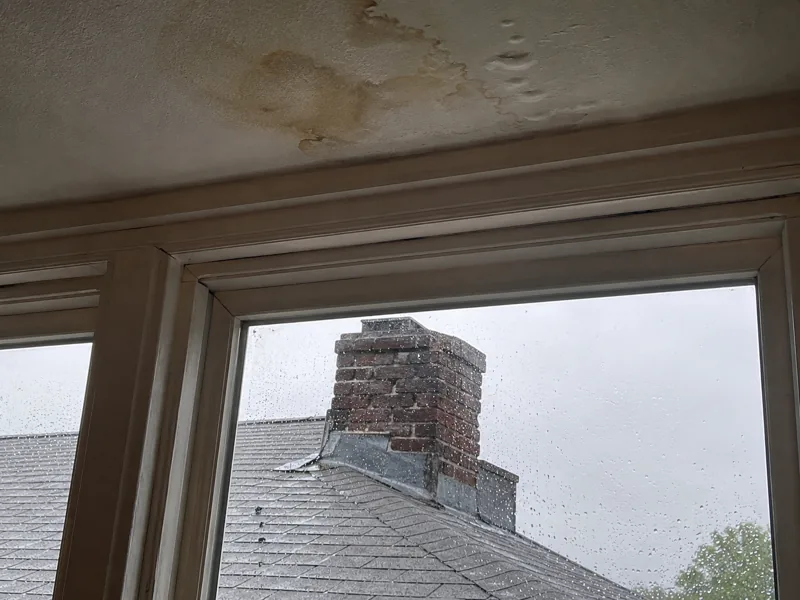
Chimney Crown Repair in Central Massachusetts
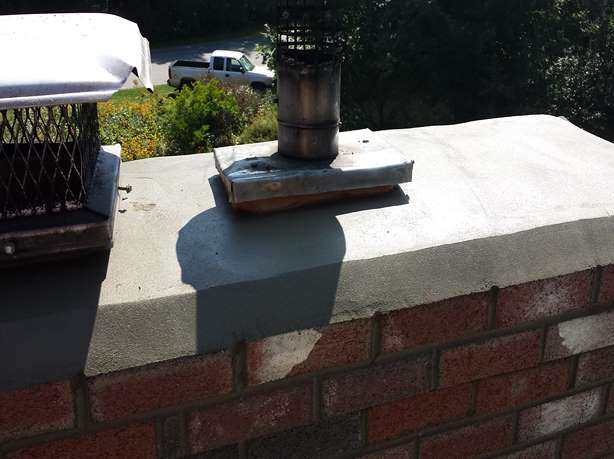
The crown is the cement surface covering the top of a masonry chimney. It is essentially the chimney’s umbrella, shedding rain and melting snow away from the brickwork below.
Many failed crowns were never built properly in the first place. Some are little more than a thin layer of ordinary masonry mortar spread across the top of the chimney. Others were installed over pieces of wood that were left buried underneath.
When that wood becomes wet, it swells. A thin crown cannot resist the movement, so it cracks, lifts away from the chimney, and begins allowing water underneath. From there, moisture can damage the brick, mortar joints, and interior of the chimney.
JB Mohler Masonry repairs and rebuilds chimney crowns throughout Central Massachusetts and MetroWest. We determine whether the existing crown is sound enough to repair or whether it needs to be removed so the masonry underneath can be repaired properly.
Have a cracked, loose, or deteriorated chimney crown? Send clear photos for a free initial estimate through our contact page, or call (978) 365-6800.
Why chimney crowns fail
A visible crack is only part of the story. Before deciding whether a crown can be repaired, we look at how it was built and whether it is still solidly attached to the chimney.
Common problems include:
- Crowns that are much too thin
- Ordinary masonry mortar used instead of a proper sand-and-Portland-cement crown mix
- Wood or other forming material left buried beneath the crown
- Large sections lifting loose from the chimney
- Water getting underneath the crown and damaging the upper brickwork
- Previous patches applied over material that was already failing
A crown can look reasonably intact from the ground while being loose enough to lift away by hand once it is inspected up close.
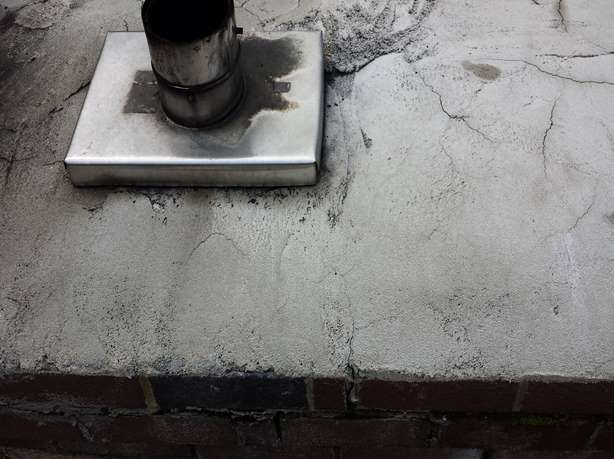
Cracking alone does not determine whether a crown can be repaired. Its thickness, material, and attachment to the chimney also need to be checked.
When can a chimney crown be repaired?
Not every hairline crack means that a crown needs to be removed.
A localized repair may be appropriate when the crown:
- Was made from the proper material
- Is approximately two inches thick
- Is still firmly attached to the chimney
- Has only minor, isolated cracking
- Sits over brickwork that remains in good condition
In that situation, the crack can often be opened enough to accept new repair material and then filled properly.
The important distinction is that the crown beneath the crack must still be sound. Patching a thin or loose crown only covers the symptom.
When should the crown be removed and rebuilt?
Replacement is generally the better choice when the crown is thin, loose, badly fractured, or built over hidden wood.
Once water has traveled beneath the crown, there may also be damage to the top courses of brick and mortar. Removing the failed material allows us to inspect and repair what is underneath instead of repeatedly covering the same problem.
A new crown is built from a properly proportioned sand-and-Portland-cement mix, with enough thickness to remain solid and protect the masonry below. Wood and temporary forming material are not left buried inside it.
What we commonly find beneath failed crowns
Some of the worst failures are not visible until the crown is removed.
In the project shown here, a thin cement layer had been placed over wood embedded across the top of the chimney. Water reached the wood, the wood swelled, and the crown broke apart. Continued water entry then damaged the brick and mortar underneath.
This is why we do not recommend repeatedly coating or patching a crown that is already loose. The condition underneath matters more than how the surface looks from the ground.
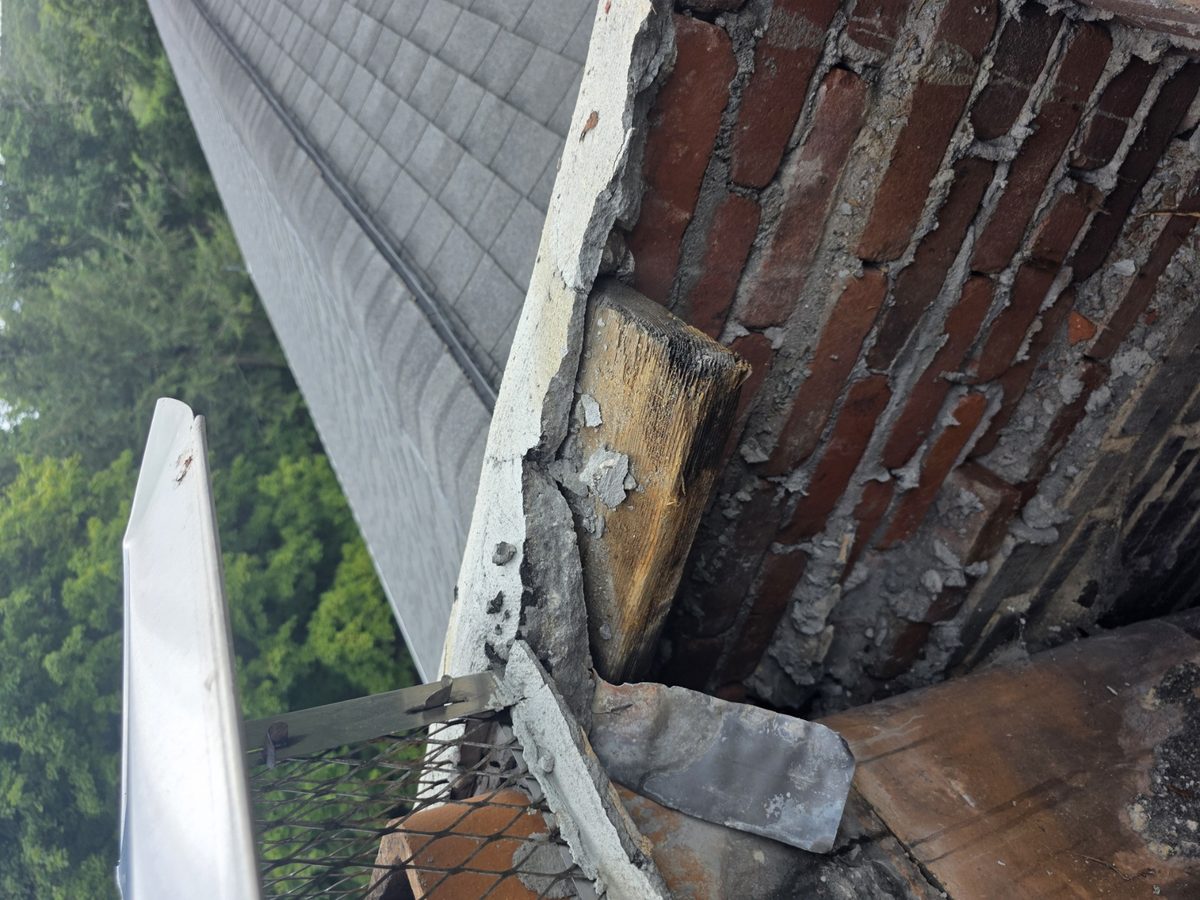
A thin crown had been installed over wood. Once water reached the wood, it swelled and helped break the crown apart.
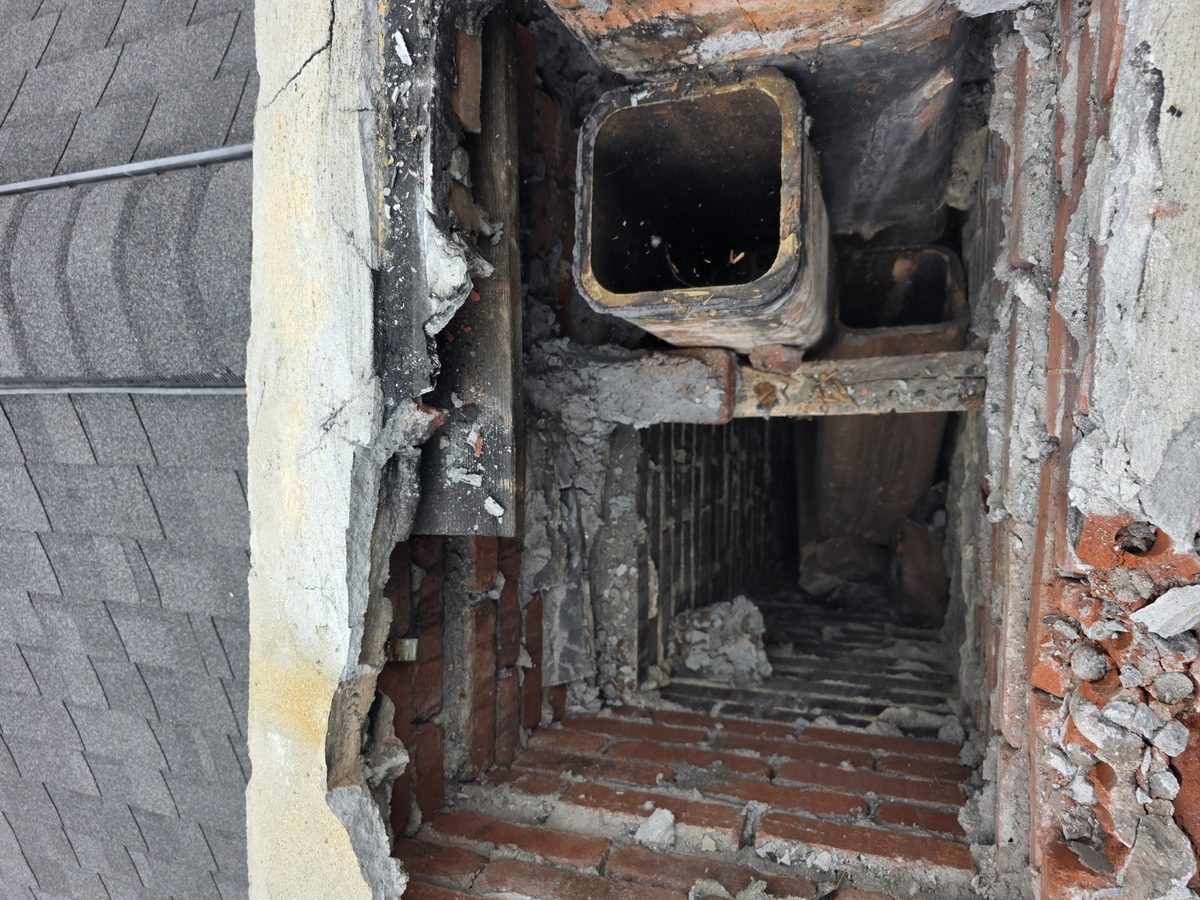
Removing the failed crown exposed the construction underneath and the extent of the water damage.
Fixing a chimney leak means checking the whole system
A failed crown can cause a chimney leak, but it is not the only possible source. When we are trying to stop water entry, we inspect the entire exposed chimney rather than automatically blaming the flashing.
We look at:
- Crown condition and construction
- Cracked or deteriorated brick and mortar
- Openings around the flue
- Roof flashing and counterflashing
- Previous patches, coatings, and sealants
Flashing is often blamed because it sits where the chimney meets the roof, but it is not always the problem. Water entering through a failed crown or deteriorated masonry can travel through the chimney and appear inside near the roofline, making the flashing look responsible.
When the flashing has actually failed, we can remove and replace it as part of the repair. Replacing sound flashing, however, will not stop a leak caused by the crown or masonry above it.
If the chimney passes through the middle of the roof and the source cannot be confidently isolated, read our guide to stopping a leaking chimney for the more complete approach we use to eliminate the possible entry points.
Chimney crown repair from an experienced mason
JB Mohler Masonry is an owner-operated masonry company based in Lancaster, Massachusetts. Crown repairs are evaluated as masonry repairs, not simply as coating or sealing projects.
The goal is to determine:
- Whether the existing crown is structurally sound
- Whether a localized repair is appropriate
- Whether the crown should be removed
- Whether the brick underneath also needs repair
- Whether the crown or masonry is causing the leak
- Whether the roof flashing is genuinely failing
- Whether more than one defect needs to be repaired
Have a cracked, loose, or deteriorated chimney crown? Send us clear photos for a free initial estimate, or call (978) 365-6800.
Frequently asked questions
Does every cracked chimney crown need to be replaced?
No. Minor cracking in an otherwise properly built, firmly attached crown may be repairable. The crown's thickness, material, and condition underneath matter more than the crack alone.
Can you repair a crown by coating over it?
A surface repair only makes sense when the crown underneath is solid. Coating a thin or loose crown does not correct the original failure.
Why would there be wood under a chimney crown?
Wood is sometimes used temporarily while constructing the crown. The problem occurs when it is left buried inside. If water reaches it, the wood can swell and break a thin crown apart.
Can a damaged crown cause brick deterioration?
Yes. Water entering beneath the crown can soak the upper brick and mortar. Repeated freezing and thawing can then cause mortar failure and brick faces to break apart.
How do you know whether the crown is causing a chimney leak?
The crown must be evaluated along with the brick, mortar, flue openings, and roof flashing. More than one defect may be contributing to the same leak.
Do you replace chimney flashing?
Yes. If an inspection shows that the flashing or counterflashing has failed, we can replace it. Flashing is often blamed for chimney leaks when the actual problem is a failed crown, deteriorated mortar, or damaged masonry higher on the chimney. We identify the likely source before recommending replacement.
Ready for a straight answer on your chimney crown? Send photos through the estimate form and we will tell you whether the crown looks repairable or whether the top of the chimney needs to be opened up.
How it works
Related work and guidance
If damage extends below the crown, see how professional chimney repair addresses leaks, failed crowns, loose mortar, and damaged masonry.
When the joints are the weak point, review when weathered chimney mortar needs repointing to restore a durable water-shedding joint.
Send a photo.
Get a straight answer.