How to Stop My Chimney From Leaking
Why Your Chimney Keeps Leaking (Even After You Paid to Fix It)
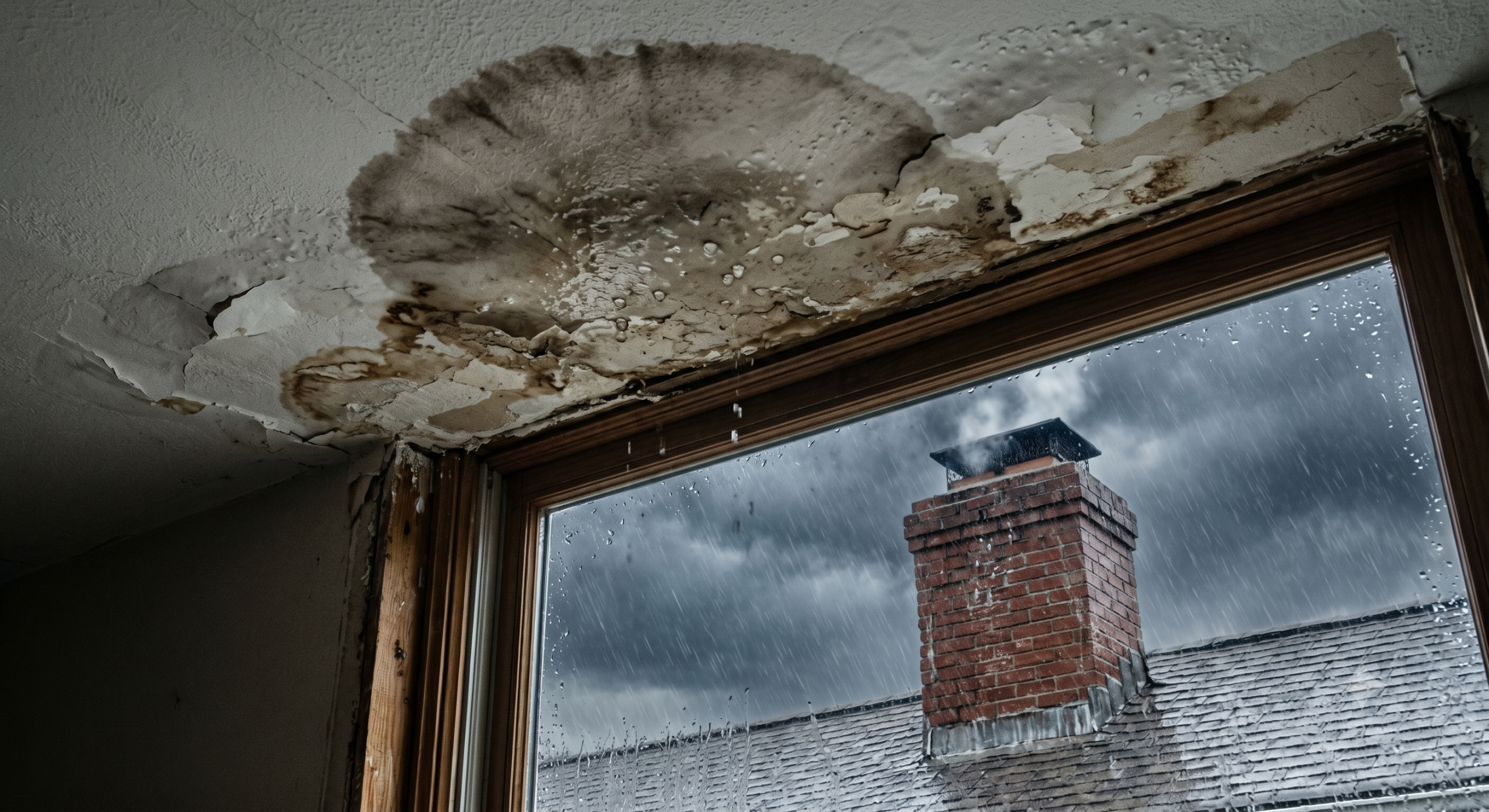
So, you’ve already done the painful part. You called out the "pros," cut the check, waited for the next storm, and watched the exact same water stain appear on your ceiling.
That’s the most frustrating part of the whole deal. It’s not just a little water; it’s the bubbling plaster, the mold anxiety, the rotting wood, and that pit in your stomach every time the weather forecast looks bad.
If this is happening to you, you aren’t crazy. A leaking chimney loves to play mind games—it’ll seem totally fine during a light drizzle, but the second a real downpour hits, your bedroom ceiling starts dripping again.
The Missing Link: Old-School Pan Flashing
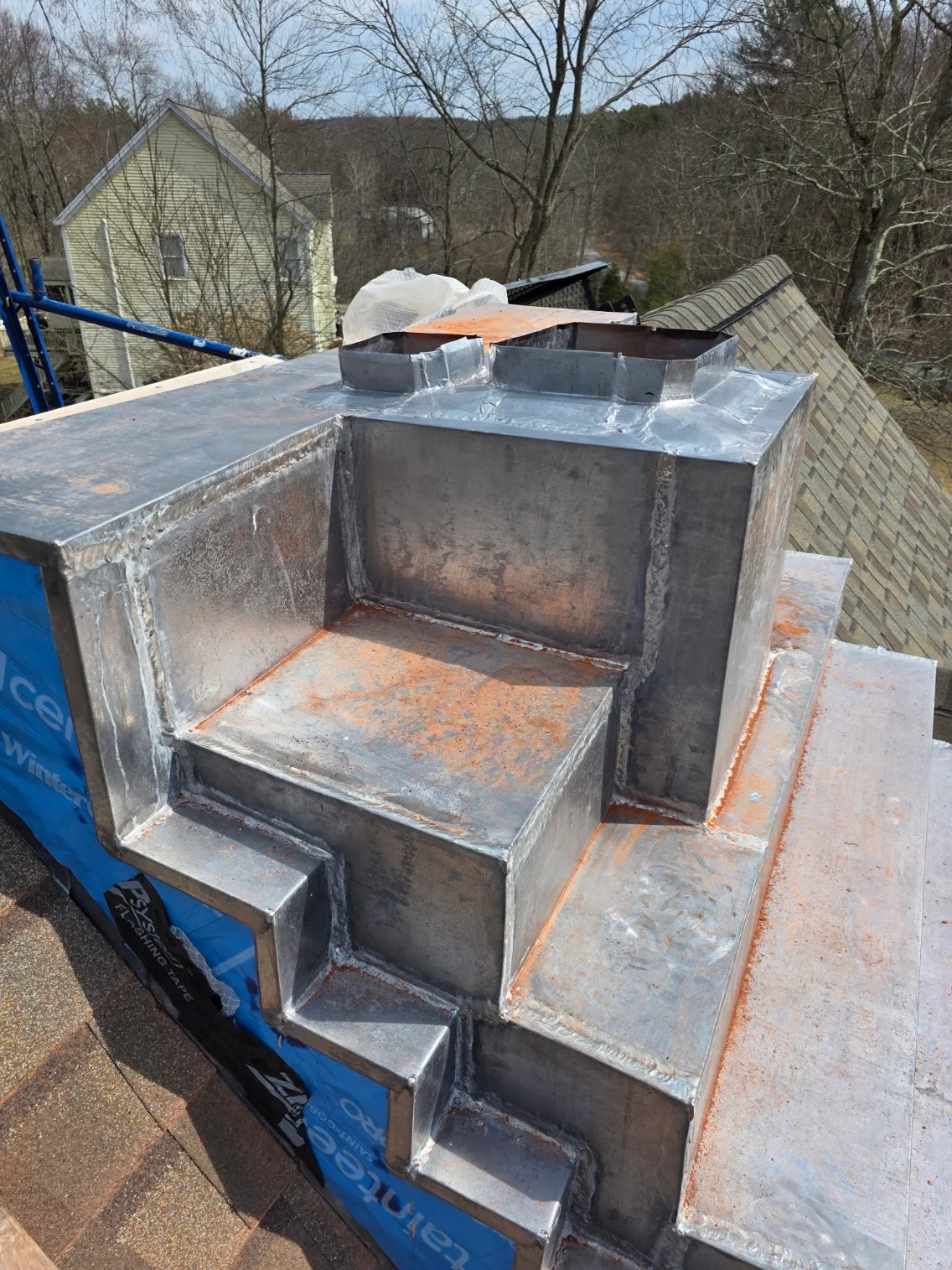
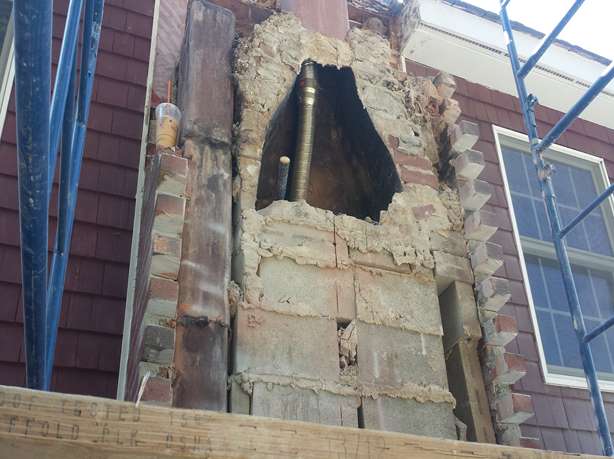
Copper pan flashing, turned in at the flues. Back in the day, old-school masons had a foolproof concept to handle this. They would install a lead "pan" or "through-flashing" right inside the chimney. This was a solid sheet of soldered metal running completely through the middle of the brickwork right above the roofline. Its job was to catch any water seeping down through the upper brickwork and channel it safely back outside before it could drop into the living space.
Hardly anyone does this anymore. True chimney masons are tough to find, and too often, desperate homeowners hire a standard chimney sweep to fix a complex structural moisture problem they simply aren’t equipped to handle.
The Evolution of the Through-Pan: Fixing the Weakest Link
But as good as the old-timers were, their traditional method had a critical vulnerability. The old way of installing through-flashing often left a gap of exposed masonry below the pan before it cleared the roof line. Over decades of freezing and thawing New England winters, that exposed brick remained the weakest link in the system, still vulnerable to absorbing driving rain.
What we do now goes a step further than a standard through-pan. Our updated method incorporates the same heavy soldered flashing but eliminates that vulnerable gap entirely, leaving no exposed masonry between the roof line and the pan. By wrapping the flashing tight to the roof transition, water doesn’t just get caught — it gets locked out of the house entirely.
Why the Leak Feels So Random
Why does it leak during some storms and not others? It usually comes down to how soaked the bricks get. Bricks are basically hard sponges; they aren’t waterproof. They can only hold so much water before they saturate completely, and that extra moisture has nowhere to go but inside your house.
Throw in some heavy, wind-driven rain, and it gets worse. If you have a massive center chimney, you’re dealing with a ton of surface area soaking up water like a giant sponge.
The Real Story: A Case Study in Frustration
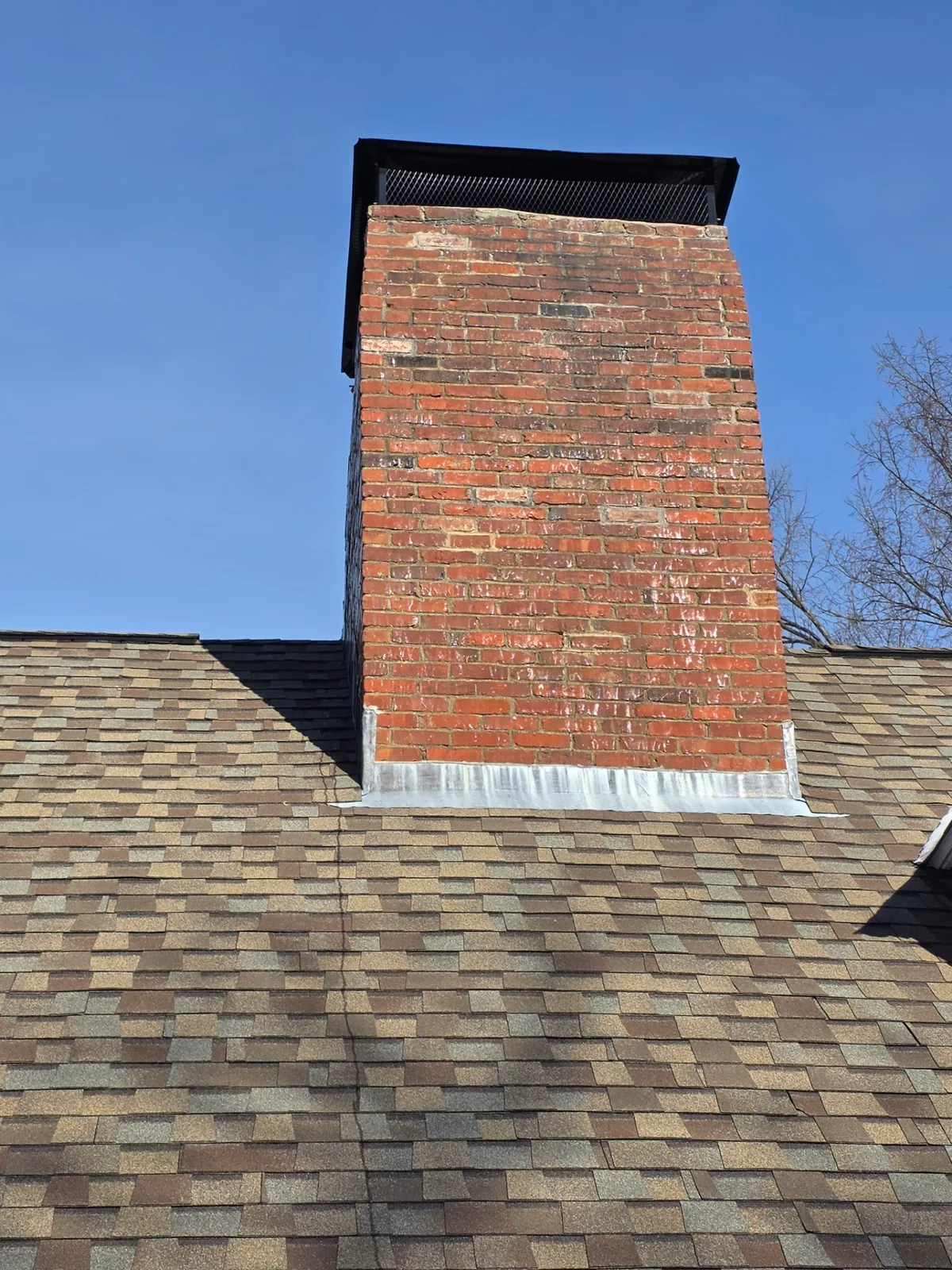
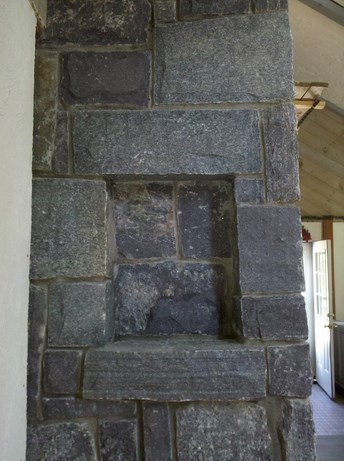
The Harvard, MA chimney from this story. Take a recent job in Harvard, MA. The homeowner had already hired multiple companies and spent thousands of dollars, yet the chimney still leaked. At that point, you lose all trust. You start wondering if anyone actually knows what they’re looking at.
The Big Misunderstanding
The main thing everyone missed was how water actually moves. Waterproofing sealer doesn’t magically stop water from getting inside a chimney. If a chimney is absorbing water through the brick and mortar, slapping a coating on the outside isn’t a real fix. You need to give that water a proper way out, or stop it from entering the living space entirely.
The Hard Truth
Once we looked at the history of failed repairs, the real issue became obvious. But it’s never fun telling a homeowner who just spent thousands of dollars that the previous fixes were a waste of time.
The reality? The chimney had to be torn down to the roofline and completely rebuilt with a proper copper pan flashing installed inside.
We did the rebuild, put the copper pan in, and guess what? No more leaks.
Practical Advice: What to Do Next
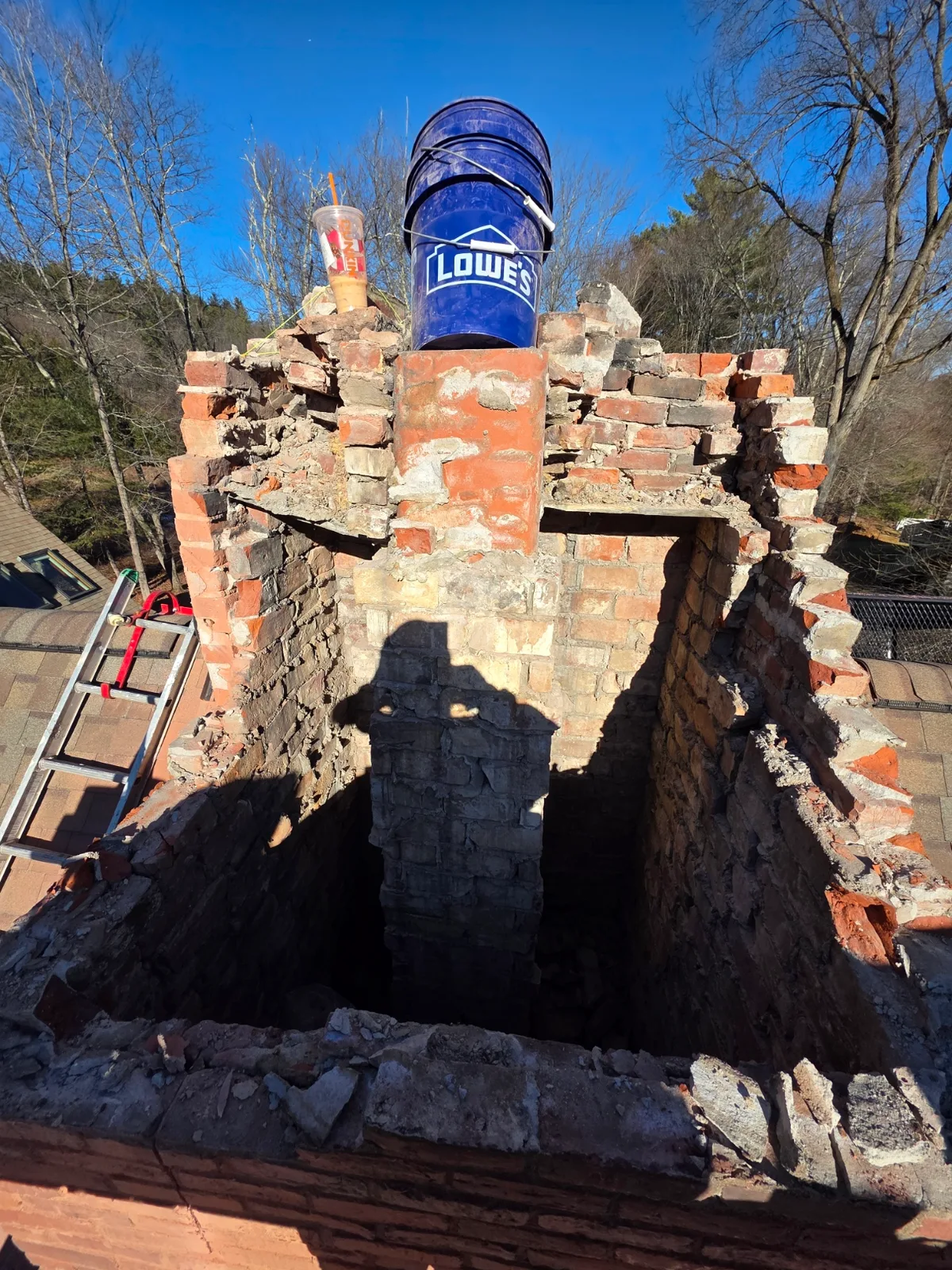
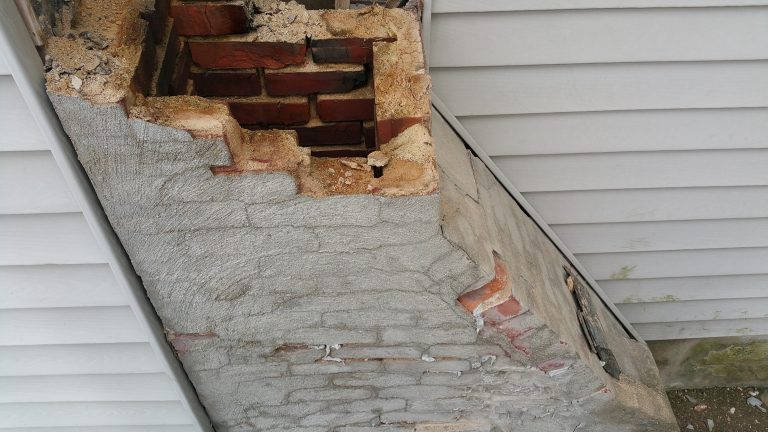
What the insides of a chimney looks like. If you have a mystery leak and there’s no glaringly obvious hole in your roof, a pan flashing is usually the ultimate, one-and-done fix.
If your chimney sits in the middle of your house (not on an exterior wall), go ahead and check the easy stuff first—but don’t be surprised if the real answer is a rebuild with a pan. (Just make sure a roofer rules out the shingles first. On the Harvard job, the chimney was right at the peak of the roof, so we didn’t even need a cricket to divert water).
What to Do:
- Start with the basics: Rule out roofing issues or cracked crowns first.
- Ask the right questions: If you have a center chimney and the leak won’t quit, ask a mason if you need an internal pan flashing instead of another temporary patch.
What to Avoid:
- Do NOT use cheap spray-on water sealers that create a plastic-like membrane. These trap moisture inside the brick. Because the water can’t evaporate out, it freezes in the winter and causes your chimney to literally crumble apart from the inside out.
Let’s Fix It Right the First Time
If your leaking chimney has already been "fixed" two or three times and it’s still ruining your ceilings, it’s time to stop guessing. We handle chimney repair in Massachusetts every week — including chimney repair services in Harvard, MA and the surrounding Central Massachusetts towns.
[Request a Masonry Estimate Today](https://www.jbmohlermasonry.com/contact-us)
Or call (978) 365-6800 — Mon–Fri, 8AM–5PM.