Repairing a Stone Foundation – Part 1
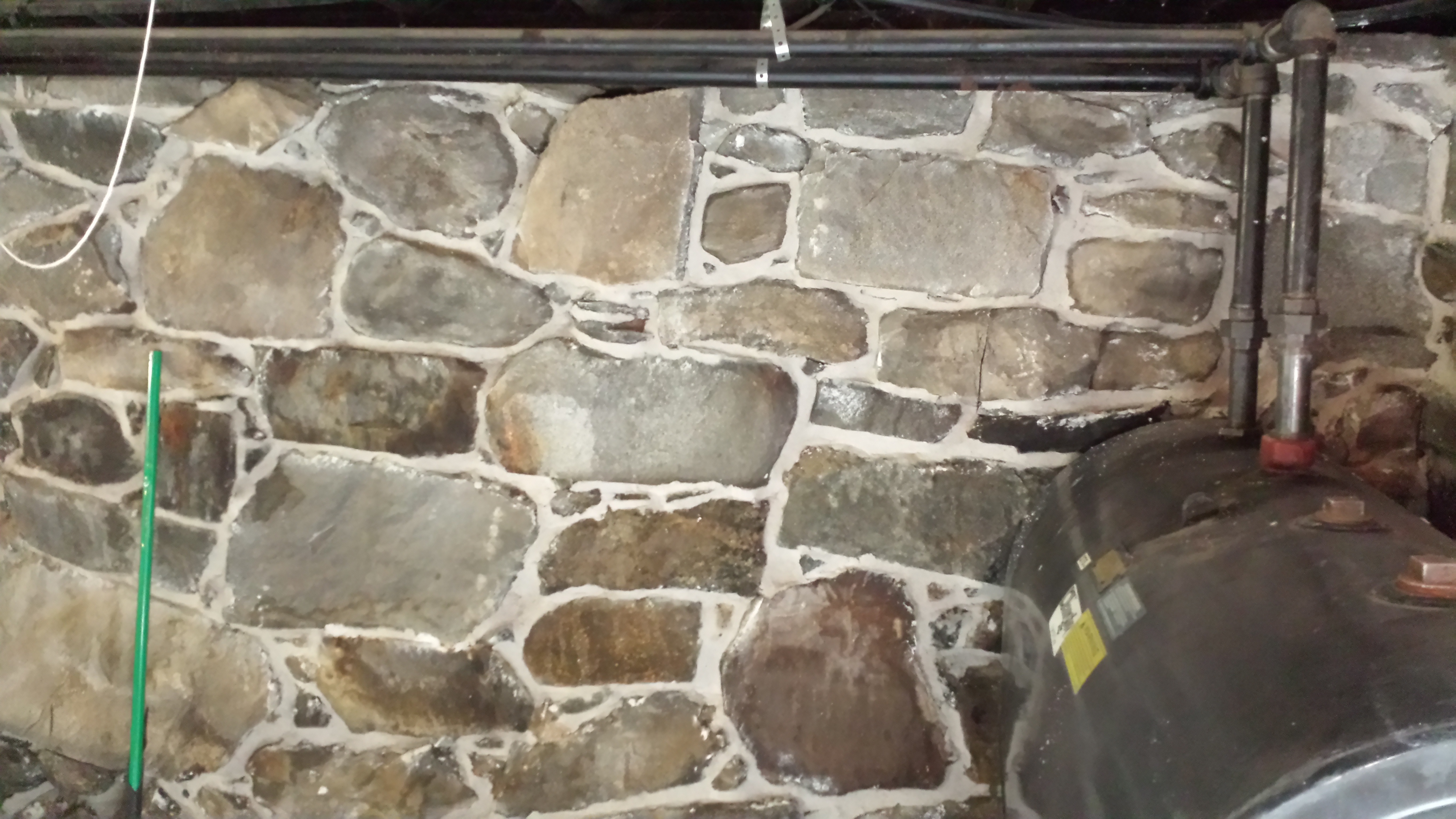
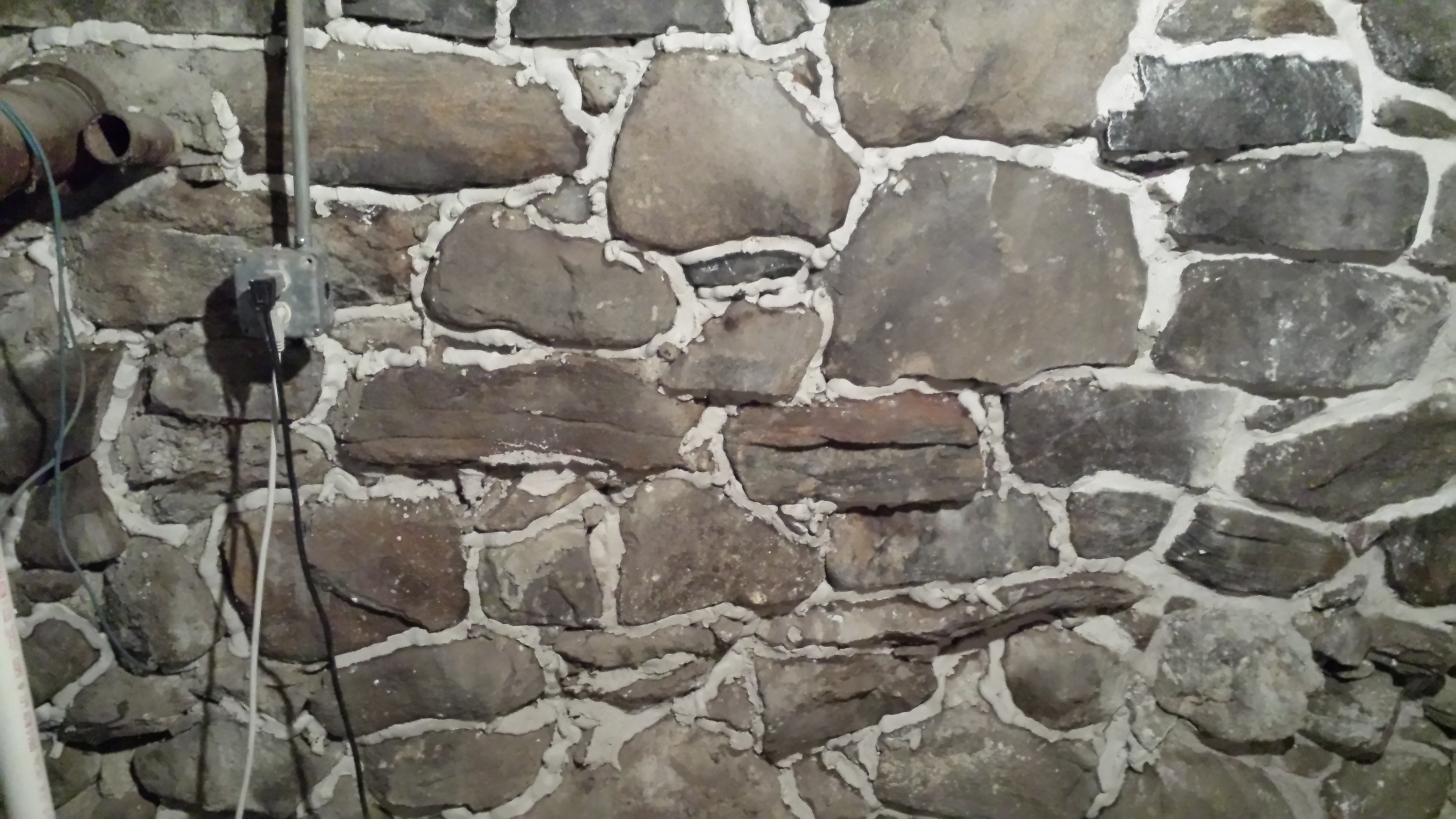
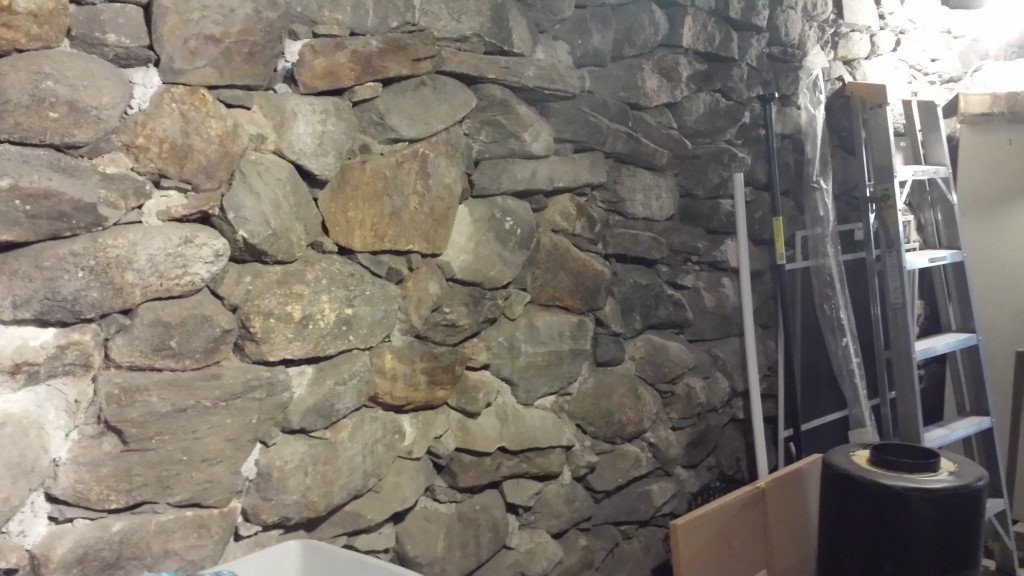
Do you have an old stone foundation that needs repair? We can help, but first, a bit of important information. A couple hundred years ago, we didn’t have poured concrete foundations, flue liners, or Diet Pepsi 🙂 A lot of people in Massachusetts have basements built with rubble stone and mortar. Many of them leak water, host darting chipmunks, and collect dust and spiders.
The History of Lime Mortar in New England
Before 1930, almost all masonry was built using a mortar made with lime and sand. It’s critical to know this before proceeding with any repairs. Lime mortar is one of the oldest known types of mortar, and its properties allow it to give and flex with old stone foundations. It even “self-heals” to an extent.
Portland cement (the main ingredient in modern concrete) wasn’t in common use until the early 20th century. It is fast-curing, rigid, and less permeable to water. While that sounds like a good thing for new construction, it is unfortunately VERY BAD for antique masonry built with a lime-based system.
Why Stronger Isn’t Better for Stone Foundations
When repairing masonry, the new mortar must be the same or less strong than the original mortar. A typical modern Type N mortar has a PSI of about 750. When repairing antique mortar, I use specialized repair lime (like Limeworks) which has a compressive strength of around 500 PSI. This allows the mortar to act as the “sacrificial” part of the wall, protecting the stones or bricks themselves.
The Danger of Trapped Moisture
A stronger Portland mortar does severe harm to an antique wall because it traps moisture. Lime mortar is designed to “wick” moisture out of the wall and let it evaporate. If this function is shut off by Portland cement, waterproof paint, or foundation tar, the inner lime mortar suffers accelerated deterioration. This is why you see mortar turn into “crumbly sand” behind a modern repair.
Signs of Improper Foundation Repointing
- Crumbly Interior Walls: Mortar that turns to dust on the floor.
- Spalling Brick: The faces of bricks popping off because moisture can’t escape.
- Failed Exterior Joints: New mortar pushing out as moisture builds up behind it.
Foundations built a hundred years ago had no footings or vapor barriers—the masonry was designed to handle the dampness of the New England soil. Modern cements are not equipped to do that. If you allow someone to repoint your foundation with typical Portland mortar, you may be looking at a total structural failure within 10 years.
Expert Historic Masonry Consultations
If you would like a consult on your antique masonry or basement repointing project, please continue to Part 2 of this series to see our specific process.
For an inspection in Lancaster, Concord, or the MetroWest area, feel free to Contact Us or call 978-365-6800 to discuss your needs.
Our Service Area
JB Mohler Masonry provides expert foundation repair and historic restoration throughout Lancaster, Clinton, Sterling, Wayland, and Concord, MA.